These docs are for the beta version of OpenCode, which will become OpenCode 2.0. The beta is still changing: we may
wipe your data, things may break, and APIs, configuration, and plugin APIs may change.
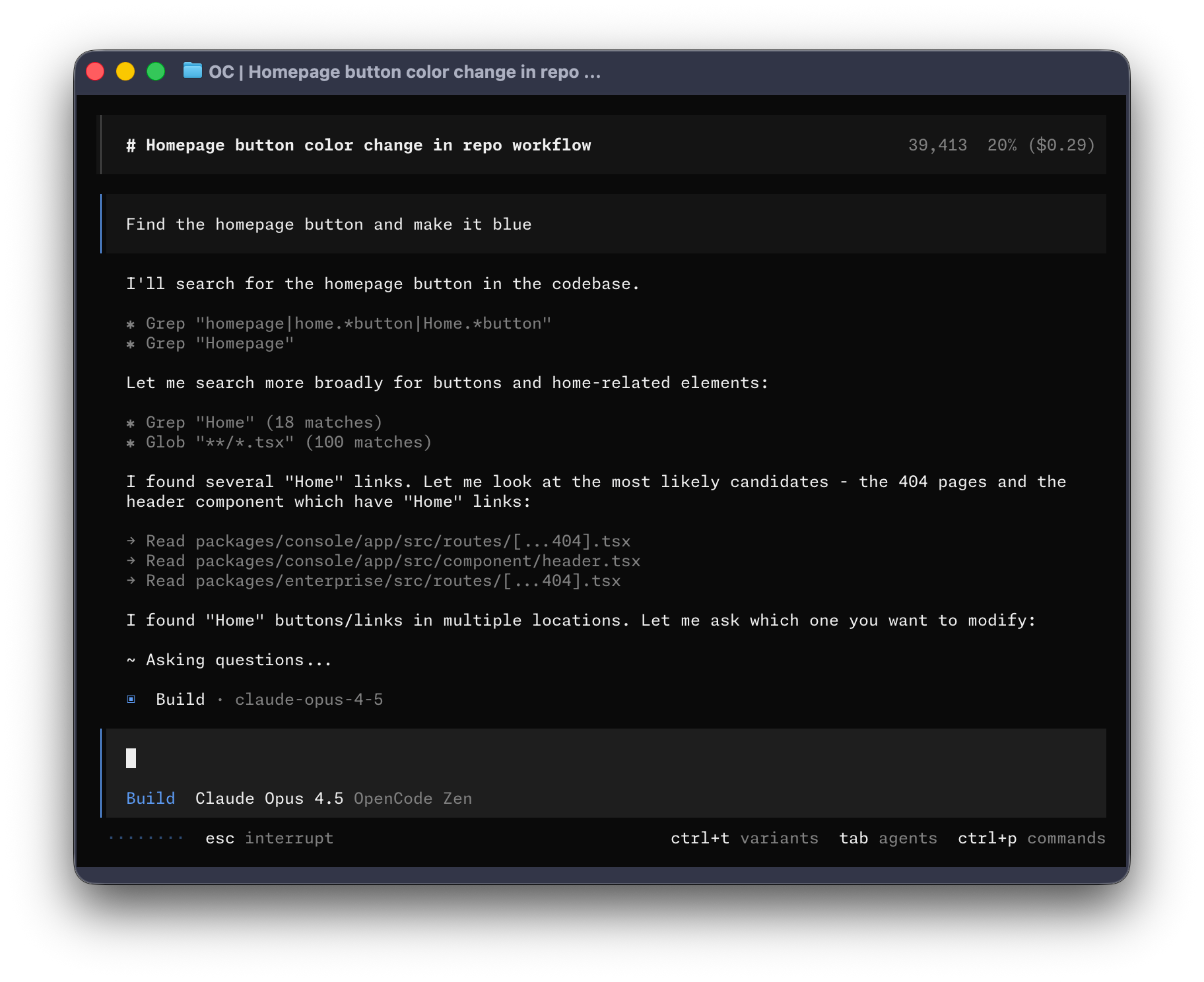 Let’s get started.
Prerequisites
To use OpenCode in your terminal, you’ll need:
- A modern terminal emulator like:
- API keys for the LLM providers you want to use.
Install
The curl install script is not available in beta.
npm install -g @opencode-ai/cli@next
bun install -g @opencode-ai/cli@next
pnpm install -g @opencode-ai/cli@next
yarn global add @opencode-ai/cli@next
During beta, the executable is named opencode2.
Homebrew
Homebrew installation is not available in beta.
Arch Linux
Arch Linux installation is not available in beta.
Windows
chocolatey
scoop
mise
docker
Chocolatey installation is not available in beta.
Scoop installation is not available in beta.
Mise installation is not available in beta.
Docker installation is not available in beta.
Connect
With OpenCode you can use any LLM provider by configuring its API key.
Run /connect in the TUI and select your provider.
If you’d like easy access to all the best coding models you can try out
OpenCode Console.
You can also try OpenCode Go a $10/month subscription
plan that grants you access to the best open source models.
Use /models to browse the providers and models available to your project. See Providers for connection and
configuration details.
Usage
You are now ready to use OpenCode in your project. Here are a few common workflows.
Ask questions
Ask OpenCode to explain your codebase.
Use @ to fuzzy search for files in the project.
How is authentication handled in @packages/functions/src/api/index.ts
Add features
Ask OpenCode to add a feature by describing the desired behavior and providing relevant context.
When a user deletes a note, flag it as deleted in the database.
Create a screen that shows recently deleted notes.
From this screen, the user can restore a note or permanently delete it.
Give OpenCode plenty of context and examples.
Undo changes
Use /undo when a change isn’t what you wanted.
OpenCode stages a conversation revert and restores your original message so you can revise it. In a Git repository, it
also restores file changes when snapshots were captured successfully. Run /undo multiple times to move the conversation
boundary back, or use /redo to restore the staged conversation and files. See Undo for
limitations and safety details.
Customize
Make OpenCode your own by picking a theme, customizing
keybinds, configuring formatters, creating commands, or
editing the OpenCode config.
